After the last “I’m not ready for bed!”
After the final “I want to stay up!”
After a full day of masking, redirecting, co-regulating, negotiating, and surviving…
We reset too.
As a neurodivergent-led family, our evenings are not just about winding the kids down — they’re about helping all of us shift into a calmer state. Sometimes it works beautifully. Sometimes it’s total chaos. But the more we lean into gentle transitions and sensory tools (for them and for us), the smoother it goes — and the better we all sleep.
Here’s what an ideal night looks like for us lately… plus some of the tools that make it easier.
🚱 Our Evening Routine: Anchored in Sensory Regulation
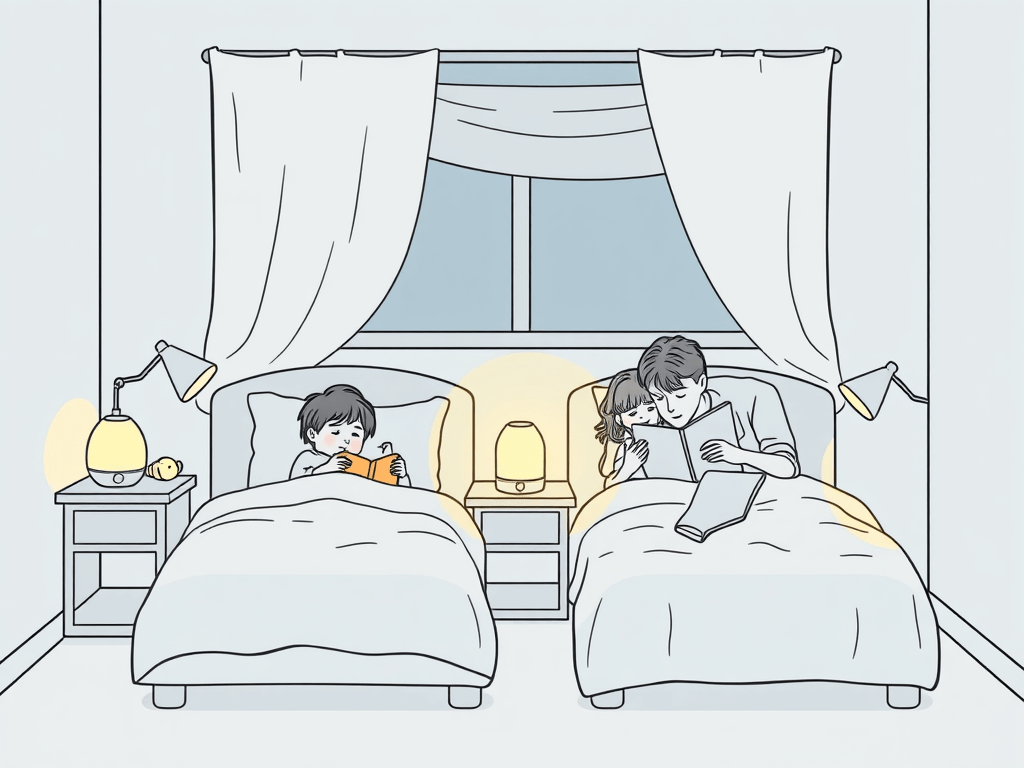
We try to keep things flexible, but certain sensory cues help everyone prepare for bedtime:
- Dimming the lights at the same time every night, while we finish dinner or tidy up
- Bath time with bubble bath and sometimes a few turns with “blowing bubbles” (to encourage deep breathing through play)
- Letting the boys rinse themselves off with the shower head after we’ve drained the tub — giving them autonomy and input
- Swing blanket time — a few gentle turns of rhythmic movement before we head to their room (this one works wonders when we remember! But in our home, it must be the SAME blanket every time. Iykyk)
- And once in bed: stories, snuggles, and the sound of our Hatch machine, which has been part of bedtime since they were newborns
Not every night includes every piece. Some nights we forget some things. Sometimes moods or timing or life just doesn’t allow for the ideal version. But when we remember most of these elements, we have a much easier time.
🛠️ Tools That Help Our Family Reset (Affiliate Links)
(Click each name to view on Amazon — as an Amazon Associate, I earn from qualifying purchases.)
1. Hatch Sound Machine
Used nightly (and even for naps) since both boys were babies, this is our most consistent bedtime cue, and the program feature makes it super easy for this transition. The soft light and customizable sounds help us all settle, and we bring it with us when we travel. The 2nd Gen is *chef’s kiss* thanks to the charging base + battery time.
2. Magnesium Lotion (Rowe Casa)
We use this after transitioning into their room — and I use it too. It helps with muscle relaxation and is especially calming when paired with dim lights and quiet time. They are a small business and offer so many other great products as well that are worth checking out.
3. Loop Earplugs (Dream)
A repeat mention but worth bringing up. I tend to wear these when things get loud during dinner/before bed. Whether it’s bouncing off the walls post-bath or sibling noise escalations. With the dream pair, they are made of soft silicone making them comfortable to wear to bed. I often have to lay down with our youngest so these are a good bedtime option. (They also come in handy when my husband’s snoring kicks in)
4. Nee-Doh Squishies / Sensory Fidgets
We all love these — they’re simple, silent, and endlessly squeezable. Whether in the boys’ hands during story time or mine during transitions, they help us redirect energy and calm down. They have sooo many different options but our favorites right now are the nice burg, gum drop and snow ball. (Just know with excessive or aggressive use, they most certainly can open up and get messy, so use with care.)
5. Wind Down by Courtney English
This rechargeable sound book offers guided breathing and movement with gentle songs created by a pediatric OT/small business. We don’t use it nightly, but when we remember to grab it, it gives our routine a gentle structure that feels like a sensory exhale while also giving us another layer of connection. If you don’t follow her on instagram yet – do yourself a favor and do it now.
🧠 What Helps — and Why It Changes
We’ve learned a few things over the years:
- Autonomy makes everything smoother
Offering choices for what’s required gives our kids (especially with PDA) a sense of control. i.e. “Do you want to put your pajamas on by yourself, or would you like me to help you?” - Movement is often needed before rest
A few minutes of swinging, running, or stretching can actually make rest possible. - Breathing together helps everyone
Whether we blow bubbles, use a breathing ball, or just breathe slowly while reading stories — co-regulating with them helps me regulate myself too. - Our regulation happens after theirs
Most nights, the real decompression comes once they’re asleep. That’s when I grab my own fidgets, use magnesium lotion, eat the rest of my dinner and get some stretching in. It’s not perfect, but it’s something.
💛 Take What Helps
This isn’t a Pinterest-perfect wind-down routine. It’s a patchwork of regulation tools, trial-and-error, and small shifts that help our family end the day with more connection and less chaos.
Some of these things work. Some stop working. Some we forget at times.
But when we remember, when we choose regulation over reaction, we all feel it.
If you’re raising PDAers, discovering your own neurodivergence, or just trying to make evenings a little less intense — this is your reminder: one small shift at a time is enough.
You’re doing the best you can.
We are too.
💬 Want to share what works in your home? Comment below or DM me on Instagram.
Disclosure:
As an Amazon Associate, I earn from qualifying purchases. Thank you for supporting our nest!

 The Regulated Nest
Leave a reply to Crying in the School Parking Lot (But Still Holding on to Hope) – The Regulated Nest Cancel reply