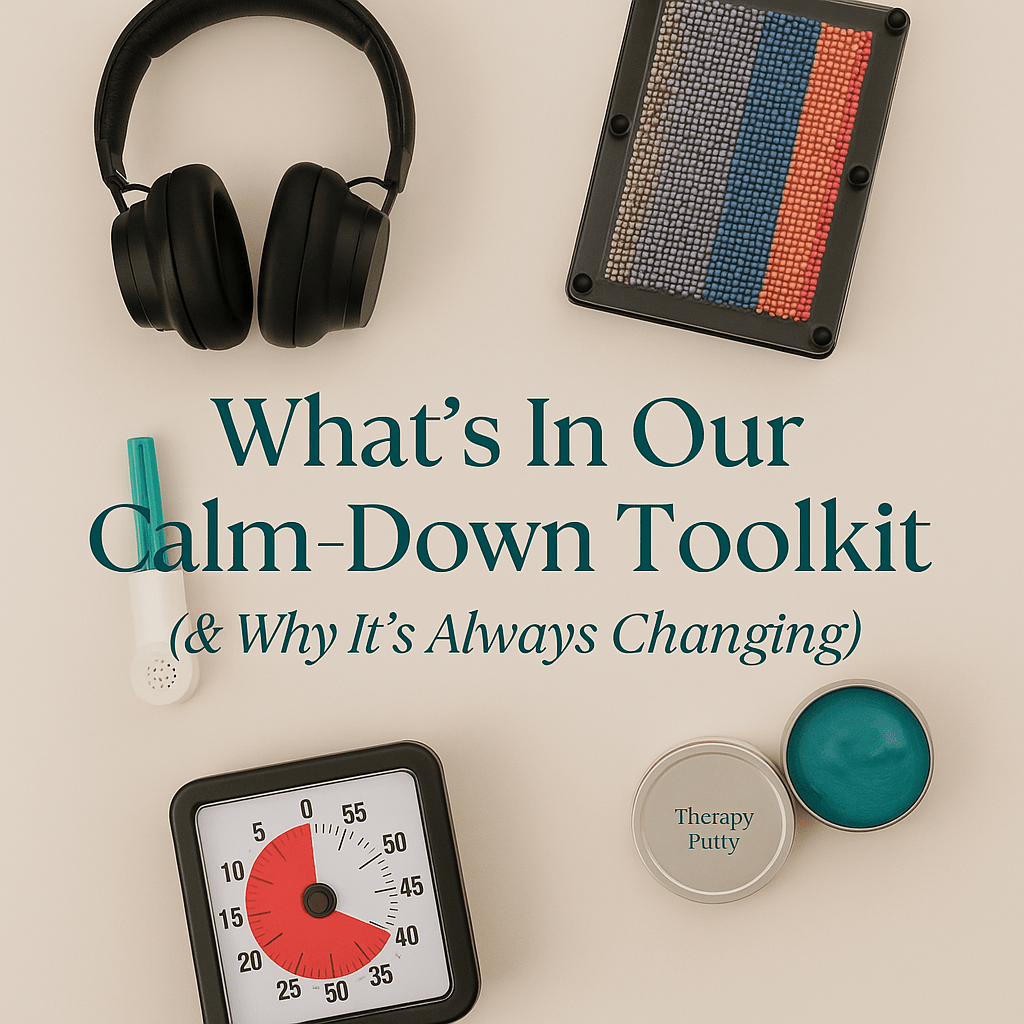
Some days, it’s a slinky. Other days, it’s thera-putty and a pinwheel to practice deep breaths with. No two meltdowns (or nervous systems) are the same, especially in a neurodivergent family navigating PDA, sensory processing differences, and emotional regulation.
We’ve tried a lot of tools over the years. Some got tossed aside, some were surprising wins, and some didn’t initially work until they did.
The thing that matters most? Having a small, intentional nest of regulation tools ready. Not perfect – just supportive.
(Click each tool name to view it on Amazon — affiliate links included)
OUR CALM-DOWN TOOLKIT
1. Breathing Exercise Tool
A must-have for transitions or quiet time. It has three different options – floating ball, whistle and balloon launcher. Fun, engaging, and a great, nonchalant way to practice deep breathing.
2. Noise-Canceling Headphones
For sound sensitivity or when overstimulation hits. These are especially helpful at new places, crowded stores, or to ease back into calm after a spike in nervous system activation (pre-meltdown).
3. Visual Timer
Knowing when something will end is everything for PDA-ers. This one shows time moving instead of counting it. Gentle reminders before time their is up is also very helpful for our kiddos.
4. Fidgets That Stay Put
Right now, we’re loving our Pin Art Impression Sensory tool. Durable, entertaining, and not easily lost. D can get lost in this for 30 minutes at a time sometimes.
5. Therapy Putty/Thinking Putty
Helps with grounding and sensory redirection. Comes in a tin/container to keep it clean and travels easily. I also love using these myself during meetings or phone calls.
As an Amazon Associate, I earn from qualifying purchases. Thank you for supporting our nest!
🧠 WHAT WE’VE LEARNED SO FAR
- You don’t need 100 tools — just a few effective ones
- Modeling is key: using tools yourself, without pressure, invites curiosity
- Involve your child (or your own needs) in building the kit
- What works today will likely change — and that’s okay
💛 TAKE WHAT HELPS
We’re not therapists. We’re just a PDA-aware, neurodivergent family doing our best to co-regulate and create safer sensory spaces for our family — without shame.
You don’t have to have it all figured out.
You don’t need a perfect plan.
You can build your own toolkit one tool at a time.
Start with what feels good — and leave the rest.

 The Regulated Nest
Leave a reply to Crying in the School Parking Lot (But Still Holding on to Hope) – The Regulated Nest Cancel reply