
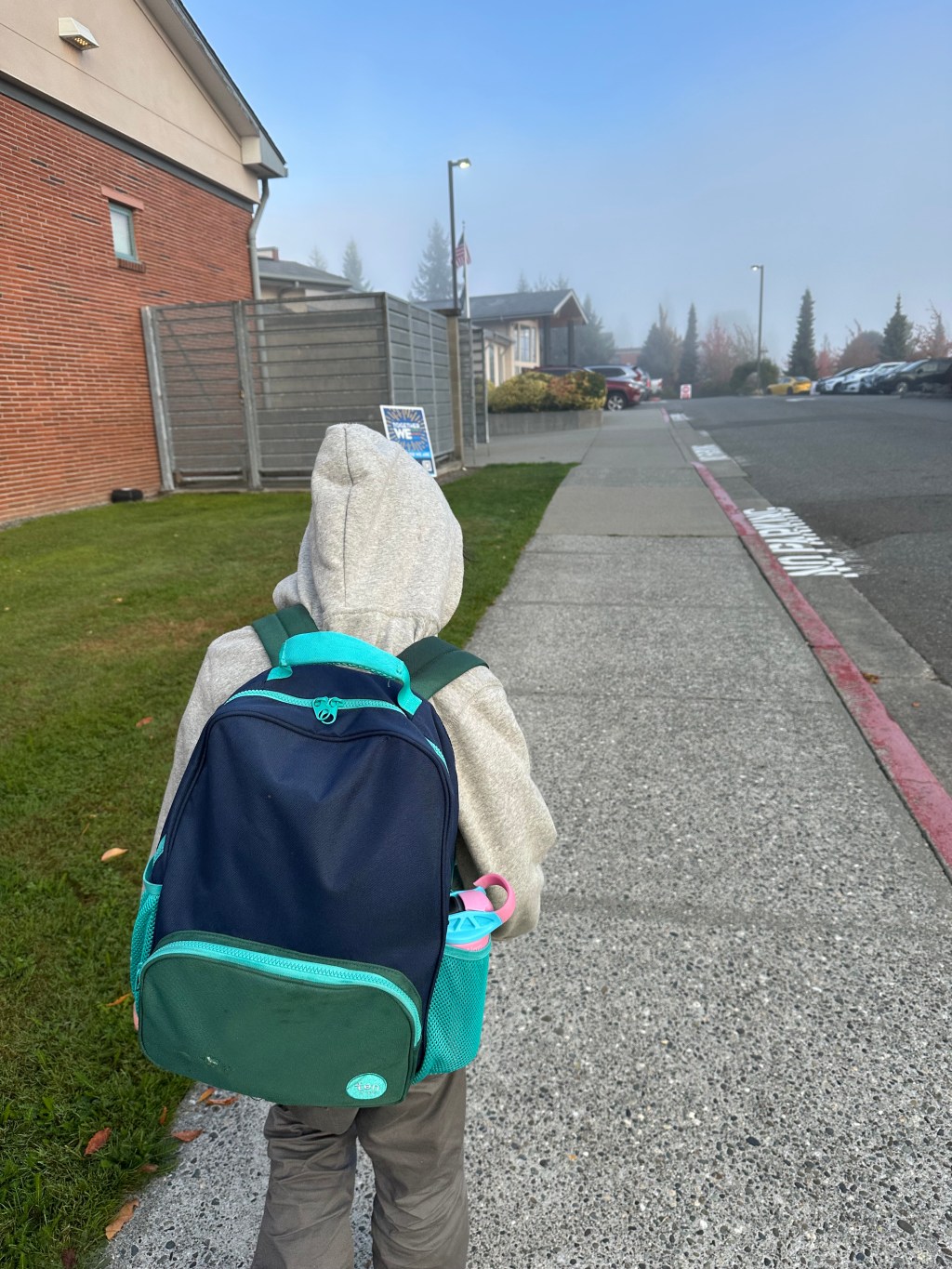
Some mornings, I’m just a mom crying in the school parking lot, wondering if we’ll ever find our rhythm. Parenting an autistic child in public school comes with school drop-off struggles, anxiety, and burnout that no one really prepares you for.
Drop-Off Struggles
Autism parents with kids in the public school system — I see you. This is freaking hard.
The morning was rough today: he’s still a little congested, which throws him off, and I was behind getting everything moving this morning. We try to give him extra time when he says he isn’t ready — whether that’s me leaving or him transitioning to a new space. Some mornings, the school drop-off struggles take over an hour, and the anxiety from transitions and leftover trauma from last year can feel overwhelming.
Today, he just couldn’t get past that point. I could feel the staff wanting me to “rip the bandaid off,” but I waited until it finally felt safe enough for both of us. Being an autism parent navigating these school transitions can feel isolating and exhausting.
Finding Gratitude (and Hesitation)
I know the first few weeks of school are usually the hardest, but it’s still disorienting. Honestly though, I’ve felt more gratitude and hope this year despite the rocky start. By chance (or really, the district’s budget decisions — not anything I had input on), we ended up at a school that’s one of the most loved in the district. The new program, though more secluded, and the new teacher both seem closer to what he actually needs to thrive.
But I can’t help asking: how possible is thriving when we’re still crawling out of last year’s burnout? (I’ll share more on that whole mess later.) This year feels like a crucial autism school transition, and I’m hyper-aware of how past trauma affects his days.
Why Homeschool Feels Out of Reach
I truly believe every family’s choice is the best one for them. But I’ve always had a wall in my head around homeschooling. The biggest reason: I honestly don’t know how we’d survive financially — especially after a full year of me being laid off. On top of that, I’m painfully aware that I’m in burnout myself. Even if I wasn’t, I’m not sure I could mentally sustain the kind of daily support he would need at home.
Like many AuDHD parents, I need alone time to survive. My insides feel like they’re burning from the inside out if I go too long without it. Dramatic, maybe — but accurate. And honestly, there’s also the strong possibility he wouldn’t accept any instruction from me, even if I structured it perfectly with zero demands and total flexibility. As an autism parent, I know the reality of balancing burnout with meeting my child’s unique learning needs — and tools like Tools I Use as a Neurodivergent Parent (That Aren’t Just for Kids) help me survive the chaos.
The Parts of School That Do Work
The truth is, he does enjoy being around others — even if they don’t always “get” him — and he does benefit from some of the activities and environments school can offer.
So when I see comments like “I REFUSE to send my kid to school” or “we ONLY homeschool,” I cringe. Do those words make me feel less than, unseen, unheard? Absolutely. But I still get the sentiment. I understand the reasoning. And my walls around homeschooling are starting to come down, because of course I want to keep every option open for him. Support for autistic students at a public school can be hit-or-miss, so keeping options open is essential. For calming and regulation strategies that help both of us, I rely on our Calm Down Toolkit and daily routines like Calming Evening Routines for Neurodivergent Families.
Cutting Through the Noise
The hardest part is cutting through the noise — because I’ve learned the hard way that you can’t just blindly trust therapists, teachers, or admins. They don’t always know best, and they don’t always have your child’s needs at heart. Autism parents quickly learn how to advocate for their child for proper supports and accommodations.
Where We Are Now
For now, though, homeschooling doesn’t feel realistic. This year will be the deciding year. And in the meantime, I’m grateful we landed with a new teacher and team who truly understands, advocates for him, and supports his need for regulation. Navigating the school year as an autism parent is challenging, but the right teacher and team can make a huge difference.
 The Regulated Nest
Leave a comment